
Home›Knowledge
EMC & engineering — clearly explained, from real-world practice.
Orientation for technical decisions: from EMC measurement through standards to electronics, embedded software and data.
No articles match this selection.
EMC in practice
Measurement, fault-finding and mitigation: how to make EMC risks visible and manageable early.
Failed the EMC test — what now?
First steps, typical causes and how to still get your product through the test.
Read the article →Immunity vs. emissions
The two sides of EMC — clearly explained, including ESD, burst and surge.
Read the article → EMCWhat is EMC pre-compliance?
Why measuring throughout development saves time, money and nerves.
Read the article → EMCWhat does an EMC measurement cost?
The honest cost factors — and how to avoid unnecessary expense.
Read the article → EMCEMC test → CE: the process
From identifying the standards through pre-compliance to CE marking.
Read the article → EMCESD, burst & surge explained
The three immunity tests with test levels, waveforms and coupling — technically grounded.
Read the article → EMCEMC measurement methods explained
Conducted (LISN) vs. radiated (ALSE / anechoic-chamber method) — how EMC is actually measured.
Read the article → EMCUnderstanding & solving EMC problems
Causes, measures and the systematic approach to passing the test.
Read the article → EMCShielding & filtering
Reducing emissions — what really works (and what doesn't).
Read the article → EMCEMC filters in practice
Common mode vs. differential mode, X/Y capacitors and current-compensated chokes — and where the filter belongs.
Read the article → EMCShielding materials & attenuation
Reflection vs. absorption, E- vs. H-fields and which materials work when.
Read the article → EMCEMC-compliant layout
Grounding, layer stack-up, filtering & shielding — the most important rules.
Read the article →Standards & industry requirements
Which requirements apply depends on the product, its operating environment and the target market. Here we place the most important standards in context, clearly.
Understanding EMC standards
Basic, generic (EN 61000-6-x) and product standards — which standard applies to your product.
Read the article →The EMC Directive 2014/30/EU explained
Scope, essential requirements, conformity assessment and CE — with the specific articles.
Read the article → EMCCISPR 25 explained simply
Classes, component vs. vehicle level — the automotive EMC standard made clear.
Read the article → EMCISO 11452 — immunity
Bulk current injection (BCI), the anechoic-chamber method and the relationship to CISPR 25.
Read the article → AutomotiveLV 124 explained
Electrical and environmental tests for 12 V components — plus OEM derivatives such as VW 80000.
Read the article → AutomotiveLV 148 (48 V vehicle electrical system)
The 48 V counterpart to LV 124 — electrical tests for mild hybrids and the like.
Read the article → EMCECE-R10 & type approval
The EMC requirements for vehicle type approval and the E-mark — related to CISPR 25 and ISO 11452.
Read the article → AutomotiveISO 15118 — charging communication
Plug & Charge without a card, secured via TLS, and bidirectional charging (V2G).
Read the article → EMCEMC in medical technology (60601-1-2)
Three use environments, immunity to radio equipment and the link to risk management (ISO 14971).
Read the article → EMCEMC in railway technology (EN 50121)
The standards series from the complete installation down to the device — plus EN 50155 and EN 50657.
Read the article → EMCEMC in industry (EN 61000-6-2/-6-4)
Why immunity is stricter and emission limits are more relaxed than in residential environments.
Read the article → EMCMachinery Directive, Regulation & EMC
The Machinery Directive 2006/42/EG, the new Machinery Regulation (from 2027) and the EMC Directive — which applies when.
Read the article → Medical technologyIEC 62304 explained
The software life cycle for medical devices and safety classes A, B, C.
Read the article → IndustrySIL & Performance Level
Functional safety for machinery: SIL (IEC 61508/62061) and PL (ISO 13849) — and how they map to each other.
Read the article →Electronics & embedded systems
From the circuit board to the firmware: fundamentals for systems that don't just work but hold up in the product.
Firmware vs. embedded software
Where is the difference — and what does it mean for your project?
Read the article →Bare-metal vs. RTOS
Does your device need an operating system? Determinism, multitasking and resources compared.
Read the article → Embedded softwareThe V-model explained
How verification and validation create demonstrable quality.
Read the article → Embedded softwareCAN & CAN-FD explained
Differential transmission, arbitration and what CAN-FD improves over classic CAN.
Read the article → HardwareSignal integrity explained
Controlled impedance, reflections, crosstalk and termination — why fast signals need a good layout.
Read the article → HardwareFrom prototype to series production
Proof of concept, A/B/C samples, design for manufacturing — the maturity stages of development.
Read the article → Embedded softwareFunctional safety & ASPICE
ISO 26262, ASIL classification (A–D) and Automotive SPICE — what they govern and how they interact.
Read the article →Software, data & connectivity
How technical systems turn into usable data, connected processes and reliable decisions.
IoT architecture explained
The layers from sensor through gateway and edge to the cloud — and which one does what.
Read the article →Edge AI explained
AI inference directly on the device — latency, data privacy, cost and the hybrid approach.
Read the article → Software & DataPredictive maintenance explained
Learning normal behaviour from sensor data, detecting anomalies and predicting failures.
Read the article → Software & DataMQTT & OPC UA explained
Publish/subscribe vs. client/server, QoS levels — and why the two complement each other.
Read the article → Software & DataData pipelines & big data
ETL vs. ELT, batch vs. streaming and the lambda architecture — from raw data to insight.
Read the article →Still have a question?
Ask us directly — we answer from real-world experience.
 Meine
Meine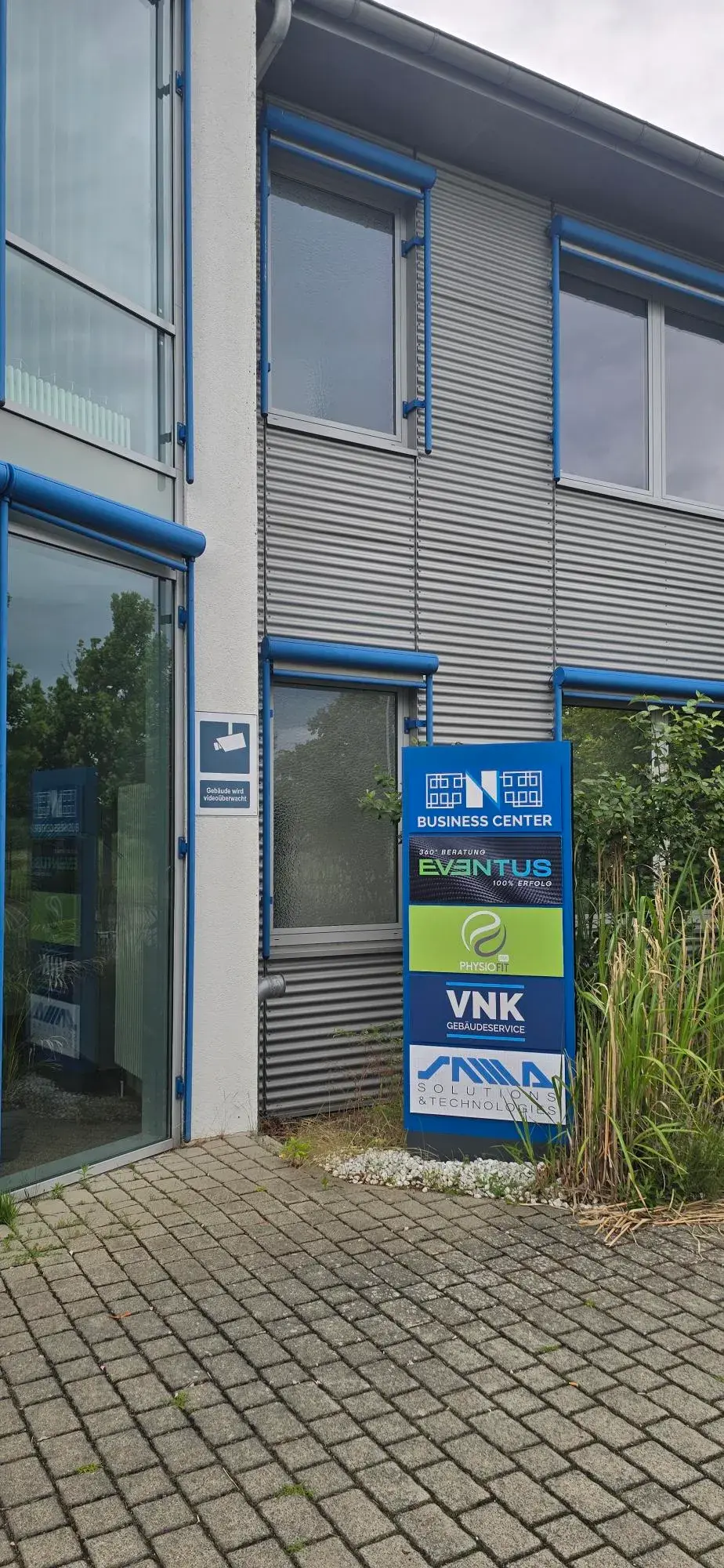 Harbke
+49 1511 0988717
Harbke — Gesellschaftssitz & EMV-Labor mit Vollabsorberhalle · Am Glüsig 1C, 39365 Harbke
Meine — Technische Entwicklung (Elektronik & Embedded) · Peiner Straße 16, 38527 Meine
Mo–Fr 07:00–19:00 Uhr